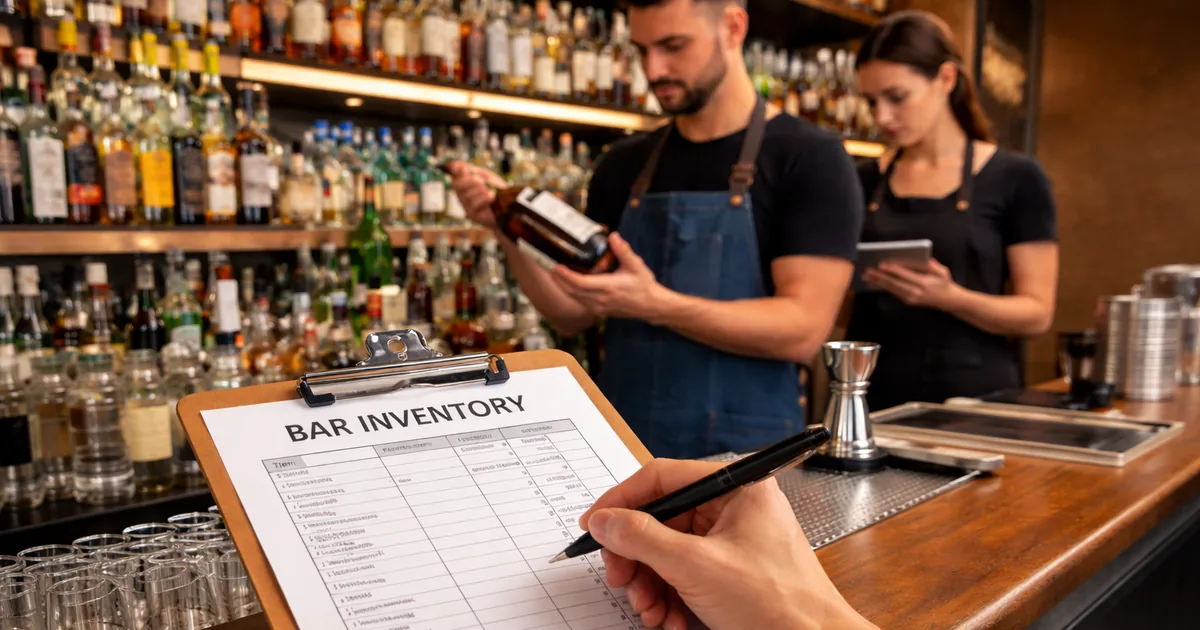
If your counts feel rushed, inconsistent, or impossible to trust, the problem usually is not effort. It is process. A bar inventory count only becomes useful when everyone counts the same way, at the same time, and with the same definitions for partial bottles, cases, and storage locations. The count itself is one step inside bar inventory management; what you do with the variance afterward is the rest of it.
The goal is not just to finish inventory. The goal is to produce numbers you can compare week over week, connect to sales data, and use to spot waste, over-pouring, theft, and ordering mistakes. That is why many operators eventually move from spreadsheets to a bar inventory app once they want faster counts and cleaner variance reporting.
The count is only useful when it reconciles to sales and menu movement. Toast's menu reports overview explains how POS data can show item sales, top menu items, modifiers, and out-of-stock items for the period you are reviewing.
Why Count Accuracy Matters
An inaccurate count creates bad decisions in every direction. You may think you need to reorder when you do not. You may miss a theft pattern because the last count was off. You may blame bartenders for variance that was actually caused by inconsistent bottle estimates. Accurate counts are what make your pour cost, depletion, and shrinkage numbers believable.
Step 1: Set Up the Count Before You Touch a Bottle
Choose a fixed count time, usually before open or right after close, and use that same window every cycle. Print or load the item list in shelf order so counters can move through the room once instead of bouncing around. Separate full bottles, partials, kegs, wine, beer, and back-stock so the team is not making decisions on the fly.
- ▸Count on the same day and time every week.
- ▸Freeze transfers and receiving until the count is complete.
- ▸Group inventory sheets by bar, storage room, and service station.
- ▸Make sure every item name matches the product your team actually stocks.
Step 2: Count Full Units First
Start with sealed bottles, unopened wine, full kegs, and full cases. These are the fastest numbers to capture and the least subjective. Counting full units first also makes it easier to isolate the slower part of the process later: estimating partial bottles.
If you are using a spreadsheet, keep your par levels and purchase units visible during the count so you can catch obvious mistakes early. If you are using bar inventory tracking software, this is where shelf-ordered item lists and mobile-friendly counting screens can save a lot of time.
Step 3: Estimate Partial Bottles the Same Way Every Time
Partials are where most count quality breaks down. Do not let one person count in quarters, another in tenths, and another by guessing. Pick one method for every spirit bottle in the building and train the whole team on it. Most bars use tenths or quarters. The best method is the one your team can apply consistently.
- 1Hold the bottle upright at eye level.
- 2Estimate the remaining liquid using your standard fraction system.
- 3Round the same way every time instead of debating borderline bottles.
- 4Enter the count immediately before moving to the next item.
If a bottle is nearly empty, count it as the nearest agreed fraction instead of creating one-off values. Consistency beats fake precision. A repeatable 0.1 estimate is more useful than a different guess every week.
Step 4: Count Every Storage Location
Do not stop at the front bar. Include back bar shelves, keg coolers, walk-ins, liquor rooms, event storage, and any office stash managers keep for emergencies. Missing one storage area makes your count incomplete even if every visible shelf is perfect.
- ▸Main bar and service wells
- ▸Back bar display bottles
- ▸Storage rooms and cages
- ▸Beer coolers and keg rooms
- ▸Satellite bars and private-event setups
Step 5: Reconcile Purchases and Transfers Immediately
Once the physical count is done, confirm that every delivery received since the last count has been entered and that any transfers between locations are recorded. Many bars think they have a shrinkage problem when they really have a paperwork problem. Clean receiving and transfer records are part of count accuracy, not a separate admin task.
Step 6: Review Variance Before the Trail Goes Cold
A count is only valuable if someone reviews the results right away. Compare actual depletion to expected depletion from sales and recipes, then flag unusual variance while the week is still fresh. The faster you review, the easier it is to connect discrepancies to a shift, station, event, or receiving issue.
Look first at high-value spirits, high-volume pours, and any item with repeated discrepancies. Those are usually the quickest path to finding whether the issue is over-pouring, bartender theft, missed comps, unrecorded waste, or a bad counting habit.
Common Mistakes That Ruin Bar Inventory Counts
- ▸Letting different people use different partial-bottle methods.
- ▸Counting after a delivery has arrived but before it is entered.
- ▸Skipping secondary storage areas or event stock.
- ▸Changing item names or bottle sizes mid-count.
- ▸Waiting days to review variance results.
- ▸Treating the count as complete even when team members had to guess on too many items.
How to Make Counts Faster Without Losing Accuracy
The fastest counts are not the ones where people rush. They are the ones where the list is organized in shelf order, the fraction rules are standardized, and the review happens in one system instead of across handwritten sheets and spreadsheets. Speed comes from process design, not from asking managers to work sloppier.
If your team is spending hours every week on counts and still struggling to trust the numbers, the process may be ready for software. A dedicated system can reduce manual entry, standardize counting rules, and make it easier to compare counts against sales without building formulas from scratch.
The Bottom Line
A good bar inventory count is simple, repeatable, and reviewable. Standardize when you count, how you estimate partials, and how quickly you investigate variance. When those pieces are in place, inventory stops being a chore and starts becoming a control system that feeds directly into your bar profit tracking.
If you want a faster process with fewer counting errors, see how BarGuard automates your inventory counts.
How to Prepare Your Team Before Count Night
The count itself should not be the first time your team thinks about inventory. Preparation is what keeps count night from turning into a two-hour search for missing invoices, misplaced bottles, and unclear item names. The manager running the count should confirm the item list, count zones, partial-bottle method, and receiving cutoff before anyone touches a shelf.
Assign roles before the count starts. One person should count. Another should verify or enter. If the same person estimates, types, and moves bottles at the same time, mistakes multiply. For high-value shelves, use a second pass. It feels slower, but it is faster than chasing a false variance later.
- ▸Close all purchase receiving before the count begins.
- ▸Make sure each counter knows which zones they own.
- ▸Use shelf-order count sheets or mobile screens so no one jumps around.
- ▸Keep empty bottles, breakage notes, and transfer notes available for review.
- ▸Set a rule for how to handle bottles found in the wrong location.
Partial Bottle Counting: Tenths vs Quarters
Partial bottles are the reason two managers can produce very different counts from the same shelf. Tenths are more precise, but they require more training. Quarters are faster, but they can hide smaller differences on high-cost bottles. The right choice depends on your staff and your risk level. Whatever you choose, document it and use it every time.
For premium spirits, tenths usually give you better control. For low-cost, slow-moving bottles, quarters may be enough. The real mistake is mixing methods without labeling them. If one manager enters 0.25 and another enters 0.3 for the same liquid level, your variance may reflect counting style instead of actual usage.
Common Count Mistakes That Create Fake Variance
When a variance report looks bad, do not assume theft first. Many scary numbers come from avoidable count mistakes. A case received after the count, a keg counted in the wrong unit, or a bottle listed under two names can make the report look broken even when the bar is operating normally.
- ▸Counting bottles before entering same-day deliveries.
- ▸Missing event storage, office storage, patio bars, or backup wells.
- ▸Recording cases as bottles, bottles as ounces, or kegs as units without conversion.
- ▸Using multiple names for the same product across the POS, recipe list, and inventory sheet.
- ▸Changing the count time from week to week, which makes usage windows uneven.
- ▸Entering waste after the count instead of before variance review.
What to Do After the Count Is Finished
A count is not finished when the last bottle is entered. It is finished when the numbers have been reviewed and the next action is clear. Start by checking obvious data quality issues: missing purchases, impossible negatives, duplicate items, and unusually large swings. Then compare actual usage against expected usage from POS sales and recipes.
- 1Review the largest dollar variances first.
- 2Check whether any purchases, credits, or transfers are missing.
- 3Compare high-variance items to the cocktails and menu items that use them.
- 4Look for shift patterns before blaming the whole team.
- 5Write down the follow-up action and review it again at the next count.
This is where BarGuard helps most. Once counts, recipes, purchases, and POS sales are connected, the system can show expected-vs-actual usage automatically. That turns the weekly count from a chore into a control process.
Bar Inventory Count Checklist
- ▸Count the same day and time every cycle.
- ▸Enter all purchases before finalizing inventory.
- ▸Count every storage location, not just the main bar.
- ▸Use one partial-bottle method and train every manager on it.
- ▸Review variance by dollar impact after the count.
- ▸Fix the top problems before the next count instead of letting the report sit unused.
How to Handle Kegs, Wine, and Cases During the Count
Bottles are only part of the inventory picture. Kegs, wine, cases, and mixers need the same consistency. For kegs, decide whether your team estimates by weight, flow meter, keg scale, or visual percentage. For wine, separate unopened bottles from open bottles and use the same partial method every time. For cases, make sure the count sheet distinguishes full cases from single bottles so purchases and usage stay in the same unit.
Unit confusion is one of the fastest ways to create fake variance. If the invoice says one case, the count says twelve bottles, and the recipe depletion uses ounces, your system must know how those units convert. If it does not, the report may be technically filled out but financially useless.
- ▸Count kegs with one method and label partial estimates clearly.
- ▸Record wine by bottle and partial bottle, not by vague case notes.
- ▸Break cases into bottle counts if that is how the product is sold and depleted.
- ▸Keep mixers and juices on a simpler cadence unless they drive cocktail margin problems.
For many bars, the simplest rule is this: count in the same unit you use to review variance. If tequila variance is reviewed by bottle, enter bottles. If draft beer is reviewed by keg percentage, keep that percentage consistent. Clean units make clean decisions.
How Long Should a Bar Inventory Count Take?
A clean count should get faster over time. A small bar may finish spirits, beer, wine, and back-stock in 30 to 45 minutes. A larger venue with multiple bars may need 90 minutes or more. The time matters less than the repeatability. If the same count takes 40 minutes one week and two hours the next, something in the process changed.
Track count duration along with count accuracy. If the team is slow because the item list is out of order, fix the list. If they are slow because partial bottles cause debate, retrain the method. If they are slow because products are stored randomly, fix storage. The count is often where messy operations reveal themselves.
Frequently Asked Questions
How often should a bar do inventory counts?
Most bars should count inventory weekly or bi-weekly. Weekly counts give you faster feedback on variance and make it easier to trace loss to specific shifts or staff. Monthly counts are the minimum for any bar tracking shrinkage, but variance becomes harder to investigate the longer you wait.
How long does a bar inventory count take?
A small single-bar venue typically completes a full count in 30 to 45 minutes with a trained team. Larger venues with multiple bars, walk-in coolers, and back-stock areas may take 90 minutes or more. The goal is consistency. A count that takes the same amount of time each period means the process is stable.
What is the best way to count partial bottles in a bar inventory?
Pick one fraction method, tenths or quarters, and train every team member on it. Hold the bottle at eye level, estimate using that same system every time, and enter the count immediately. Consistency beats precision. A count that uses the same method every week produces reliable variance data even if individual estimates are approximate.
What storage areas should be included in a bar inventory count?
Every storage location must be included: front bar shelves, back bar, keg coolers, walk-in refrigerators, dry storage rooms, event or catering storage, and any satellite bars. Missing one area creates a gap in your count that shows up as phantom variance, loss that looks real but is just uncounted stock.
BarGuard Catches What You Can't See
Connect your POS, count your inventory, and let BarGuard show you exactly where the gaps are, automatically, every week.