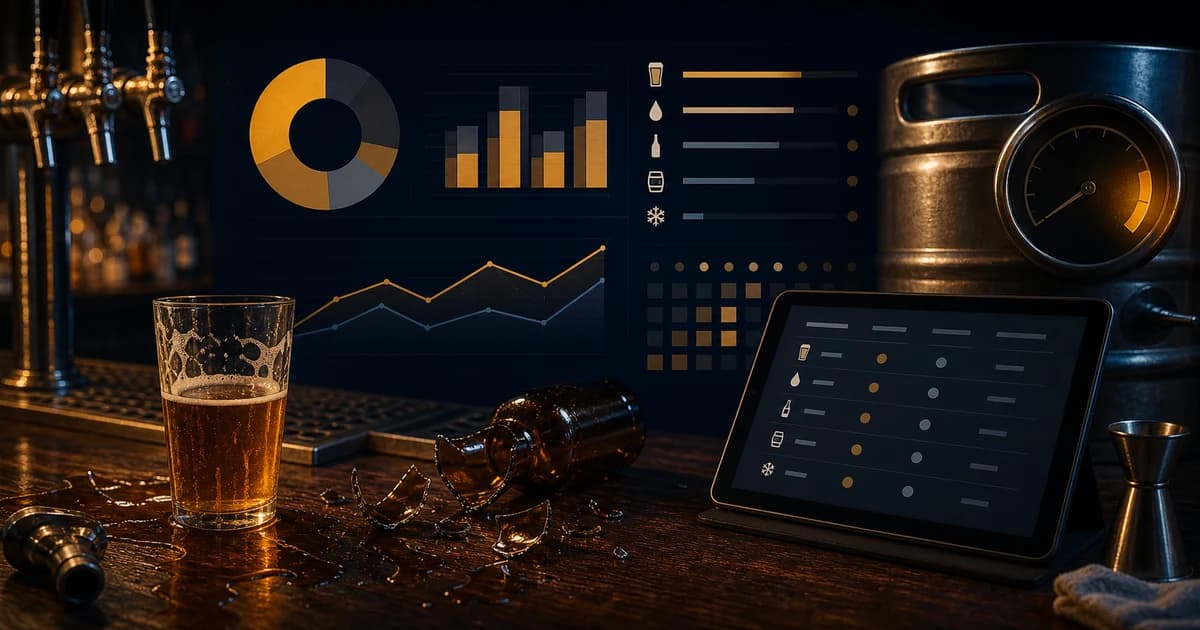
Ullage reporting is the habit of recording product that cannot be sold: spills, breakage, spoiled wine, foamy draft beer, line-cleaning waste, wrong pours, returned drinks, batch waste, and other product loss. In pub language, ullage often means beer or alcohol that is wasted or unsellable. In a modern bar inventory workflow, ullage should mean any known product movement that explains why inventory dropped without matching paid sales.
Ullage reporting deserves its own article because it sits between three things bars already track: waste logs, draft shrinkage, and inventory variance. A bar waste log explains the fields. A draft shrinkage guide explains keg loss. This article explains the full ullage reporting workflow and how to use it to protect profit without turning every spill into a staff confrontation.
Ullage reporting supports the same operating discipline as the bar waste log, draft beer shrinkage, and bar inventory variance guides. The difference is framing. Ullage is the known loss bucket. Variance is what remains unexplained after known loss is recorded.
What Is Ullage in a Bar?
In bar and pub operations, ullage usually refers to beverage product that is no longer sellable. That can include beer lost to foam, product discarded during line cleaning, broken bottles, spoiled wine, wrong pours, drinks returned by guests, batch cocktails past quality, and product damaged during receiving. The exact definition varies by operation, but the management goal is the same: record known loss so it does not hide inside shrinkage.
The term often shows up in draft beer and pub environments, but the workflow applies to spirits, wine, packaged beer, cocktails, mixers, and garnish. A broken bottle of premium tequila matters. A spoiled bottle of wine matters. A half-keg lost to foam matters. Ullage reporting gives those events a place to live in the inventory system.
Why Ullage Reporting Matters
Without ullage reporting, every known waste event disappears into inventory variance. That makes the variance number louder but less useful. If a bartender drops a bottle and no one logs it, the next count shows missing product. A manager may waste time investigating theft or over-pouring when the issue was documented poorly. If a draft line foams through several pints and the loss is not recorded, keg shrinkage looks worse than it really is.
Good ullage reporting separates normal operating waste from unexplained loss. It does not make waste acceptable. It makes waste measurable. Once it is measurable, the bar can decide what to fix: staff training, glassware storage, draft temperature, batch prep, receiving quality, menu design, or manager approval rules.
What Should Count as Ullage?
The bar should define ullage before service. If staff do not know what counts, they either log nothing or log everything inconsistently. A good definition covers product that was purchased or prepared for sale but cannot be sold at full value. It should include obvious waste and quality-related discard.
| Ullage type | Example | Likely follow-up |
|---|---|---|
| Draft waste | Foam, line cleaning, warm keg pours | Check temperature, gas, line balance, and cleaning logs |
| Breakage | Dropped bottle, broken case, damaged wine | Review storage, receiving, and handling |
| Spoilage | Open wine, expired juice, old batch cocktail | Adjust pars, batch size, or open-bottle controls |
| Wrong pour | Wrong tap or wrong cocktail made | Review labels, POS mapping, and training |
| Guest return | Flat beer, corked wine, bad cocktail | Separate quality issue from staff error |
| Comp product | Approved recovery drink or VIP round | Require reason code and manager approval |
The Ullage Report Fields Every Bar Needs
An ullage report should be specific enough to explain the loss later. Product name and rough quantity are the minimum. The useful report includes product, amount, unit, reason, shift, employee, manager approval, location, note, and whether the product was discarded, replaced, comped, or credited by a vendor.
- ▸Product name and inventory item mapping.
- ▸Quantity lost in ounces, bottles, kegs, cans, cases, or servings.
- ▸Reason code: foam, spill, breakage, spoilage, wrong pour, guest return, line cleaning, comp.
- ▸Shift, date, location, station, and employee when appropriate.
- ▸Manager approval for high-value items or guest comps.
- ▸Vendor credit status if the loss came from damaged or wrong delivery.
- ▸Notes that explain unusual events without becoming a long essay.
Draft Beer Ullage
Draft beer is one of the most common ullage categories because foam and line cleaning are normal parts of service. Normal does not mean invisible. If a keg loses product to foam, temperature problems, line cleaning, wrong pours, or returned pints, that loss needs to be recorded. Otherwise draft shrinkage looks like a mystery.
The Brewers Association publishes a Draught Beer Quality Manual because draft quality depends on temperature, pressure, gas, lines, glassware, and handling. Bar managers do not need to turn every ullage report into an engineering project, but repeated foam on the same tap should trigger a draft system review.
Wine and Cocktail Ullage
Wine ullage often comes from open bottles that spoil before they sell, incorrect glass pours, guest returns, corked bottles, or event service that opens more product than needed. Cocktail ullage often comes from wrong builds, spilled drinks, batch overruns, expired juice, and garnish prep waste. These categories are easy to underestimate because each event feels small.
The fix is not to punish every mistake. The fix is to log enough detail to see patterns. If the same BTG wine is spoiled every week, par levels or open-bottle procedures need work. If the same batch cocktail is dumped after slow weekdays, batch size is too large. If wrong pours happen around one station, labels or POS mapping may be confusing.
Receiving Ullage and Vendor Credits
Some ullage starts before the product reaches the shelf. A case arrives broken. A keg arrives warm. A wine delivery includes damaged bottles. A vendor sends the wrong item. If that product cannot be sold, it should be recorded as a receiving issue and tied to a credit. Otherwise the bar pays for product it did not sell and later sees confusing inventory movement.
This connects directly to bar inventory purchase orders. Receiving loss should not be blended with bartender waste or unexplained shrinkage. It belongs in its own bucket because the corrective action is different: vendor credit, delivery review, receiving notes, or ordering change.
How Ullage Reduces False Theft Signals
A weak ullage process makes theft detection worse. If legitimate waste is not recorded, variance rises. Managers then see missing product and may suspect staff. That creates tension without better evidence. A strong ullage process removes known loss from the mystery bucket, which makes real unexplained loss easier to spot.
This is especially important for high-value spirits and draft beer. A broken premium bottle should be documented immediately. A foamy keg should be logged by tap and shift. Once known losses are recorded, the remaining variance is more meaningful. That helps the bar handle true bartender theft signs with better data and fewer false accusations.
Weekly Ullage Review
The weekly review should answer four questions: what product was lost, why was it lost, where did it happen, and what should change? Sort by dollar impact first. A broken bottle of premium whiskey may matter more than several low-cost soda spills. Then review repeated reasons and repeated shifts. Patterns matter more than one-off mistakes.
- 1Review total ullage dollars by category: liquor, draft beer, wine, mixers, and garnish.
- 2Sort ullage by product and dollar impact.
- 3Review reason codes for repeat patterns.
- 4Compare ullage against inventory variance for the same products.
- 5Check whether vendor credits were requested and received.
- 6Assign one action for the biggest preventable loss pattern.
Log Ullage in Real Time
Ullage reported at the end of the week is usually a guess. Ullage reported when it happens is usable data. The difference is enormous. A bartender who spills a cocktail during a rush will remember the product and reason in the moment. Three days later, the event becomes vague. The bar may know something was wasted, but not enough to connect the loss to a product, shift, or recurring cause.
Real-time logging does not need to slow service. Put the workflow where staff already work: a tablet near the service well, a simple manager form, or a mobile flow inside the inventory platform. Use a short list of reason codes. Let staff add a quick note for unusual events. Require manager approval only for higher-value products or sensitive reasons. The goal is to remove friction so the team logs waste instead of hiding it.
Ullage Metrics Worth Tracking
The best ullage report does not only show total waste dollars. It shows why waste is happening and whether the pattern is improving. Track ullage dollars by category, ullage as a percentage of category sales, waste by product, waste by reason, waste by shift, receiving-damage credits, and repeat loss by station. Those metrics turn a messy log into an operating tool.
| Metric | What it reveals | Action |
|---|---|---|
| Ullage dollars by product | Which products create the most known loss | Prioritize high-cost items first |
| Ullage by reason | Whether loss comes from foam, spills, spoilage, or comps | Fix the operating cause |
| Ullage by shift | Whether loss concentrates by daypart or team | Train or review that shift |
| Ullage vs variance | Whether known loss explains missing product | Investigate the remaining gap |
| Vendor credit status | Whether damaged product was reimbursed | Follow up before invoices are paid |
Example: Draft Foam vs Unexplained Keg Loss
A pub starts the week with two kegs of lager, receives two more, and ends with one full keg plus one partial. POS sales explain most of the usage, but the keg report still looks short. If the team logged foam from a warm keg on Friday and line-cleaning waste on Monday, the manager can separate known draft ullage from unexplained loss. If the foam log explains most of the gap, the next action is draft system review. If the log explains only a small part, the remaining variance needs deeper investigation.
Without the ullage log, the manager only sees missing beer. That missing beer could be foam, wrong pours, unrecorded comps, serving-size drift, tap mapping, theft, or count error. Ullage reporting narrows the field so the manager does not chase every possibility at once.
Use Ullage to Improve Pars and Prep
Repeated ullage is often a planning signal. If the bar dumps citrus every Sunday, prep levels are too high. If the same wine spoils every week, BTG par or open-bottle procedure needs review. If batch cocktails expire midweek, batch size is larger than demand. If draft foam spikes after deliveries, keg handling or temperature recovery may be the issue. The ullage report should feed ordering, prep, par, and training decisions.
This is why ullage should connect to the bar par levels process. Par is not only about avoiding stockouts. It is also about avoiding overstock that turns into spoilage, dead inventory, and waste. A bar that reviews ullage weekly can lower waste without guessing.
Set Approval Rules for High-Value Ullage
Not every waste event needs manager approval. A spilled soda or a broken low-cost glass-pour wine can be logged quickly and reviewed later. High-value ullage needs tighter control. Premium spirits, full bottles, high-cost wine, full kegs, large batch dumps, and repeated comp-related waste should require manager approval. The approval does not need to be dramatic. It simply confirms that a higher-dollar loss was seen, understood, and recorded correctly.
Approval rules prevent two problems. First, they stop expensive waste from disappearing into casual notes. Second, they protect staff when a real accident happens. If a bartender drops a premium bottle and a manager approves the ullage entry immediately, the next inventory count will not turn that accident into a theft suspicion. Good controls make the process fairer, not harsher.
Build Ullage Into Pre-Shift and Closeout
Ullage reporting works best when it becomes part of the service rhythm. During pre-shift, managers should remind the team which products are being watched, which reason codes matter, and when approval is required. During closeout, the shift lead should review the day's ullage entries and add context while memory is fresh. This adds a few minutes, but it prevents hours of confusion after the weekly count.
The closeout review should look for missing detail: product without quantity, quantity without reason, reason without shift context, or high-value loss without approval. Fixing those gaps the same night is much easier than reconstructing them days later. The goal is not perfection. The goal is enough clean context to make variance review useful.
Ullage Policy Template
- ▸Log known product loss as soon as service allows.
- ▸Use one of the approved reason codes for every entry.
- ▸Estimate quantity consistently by ounce, bottle fraction, keg amount, serving, or unit.
- ▸Require manager approval for premium bottles, full kegs, large batches, or repeated guest comps.
- ▸Tie receiving damage to vendor credit follow-up.
- ▸Review ullage entries during closeout before the shift details go cold.
- ▸Compare weekly ullage against variance before investigating unexplained loss.
Ullage Reporting Mistakes
- ▸Logging waste at the end of the week from memory.
- ▸Using one generic waste reason for every event.
- ▸Recording quantity without product or shift detail.
- ▸Mixing vendor damage, staff spills, guest comps, and draft foam together.
- ▸Not tying receiving damage to vendor credits.
- ▸Ignoring small repeated waste because each event feels minor.
- ▸Treating ullage as punishment instead of operations data.
- ▸Reviewing variance before subtracting known ullage.
Food Safety and Quality Discards
Some product must be discarded for quality or safety reasons. The FDA publishes the Food Code as a model for food safety practices. For bar inventory, the practical point is that safety-related discard still needs a record. The bar should never keep unsafe product to protect margin, but it should record why product was discarded so cost control remains accurate.
How to Start If You Have No Ullage Process
If the bar has no ullage process today, do not start with a complicated policy. Start with five reason codes: spill, breakage, spoilage, draft waste, and comp or remake. Require product, approximate amount, shift, and note. Review the log after one week and adjust the reason codes only if the team truly needs more detail. The first goal is habit, not perfection.
After two or three weeks, compare known ullage against inventory variance. If unexplained loss falls, the process is already working. If known ullage stays low but variance remains high, staff may still be missing events or the loss may be coming from over-pouring, theft, receiving, or recipe issues. Either way, the bar has better direction than it had with no records at all.
Keep the rollout visible. Post the reason codes where staff can see them, review examples during pre-shift, and praise accurate logging when it helps explain a variance report. The fastest way to build the habit is to show the team that ullage entries actually get used, not filed away and forgotten.
How BarGuard Helps With Ullage Reporting
BarGuard helps connect ullage to inventory variance. Waste, breakage, comps, receiving issues, and draft loss should not live in a separate notebook that never reaches the count. They need to explain product movement inside the same system that tracks counts, purchases, recipes, POS sales, and variance.
With bar inventory software, managers can record known loss, compare it to expected usage, and see whether unexplained variance remains. That turns ullage from a messy side note into a profit-control signal.
The Bottom Line
Ullage reporting helps bars and pubs separate known waste from unexplained loss. It gives spills, breakage, spoilage, draft foam, line cleaning, guest returns, and receiving damage a structured place in the inventory workflow. That makes variance reports cleaner and management decisions fairer.
If your bar has high shrinkage but weak waste records, start with ullage. Log what you know was lost, then investigate what remains unexplained.
BarGuard Catches What You Can't See
Connect your POS, count your inventory, and let BarGuard show you exactly where the gaps are, automatically, every week.