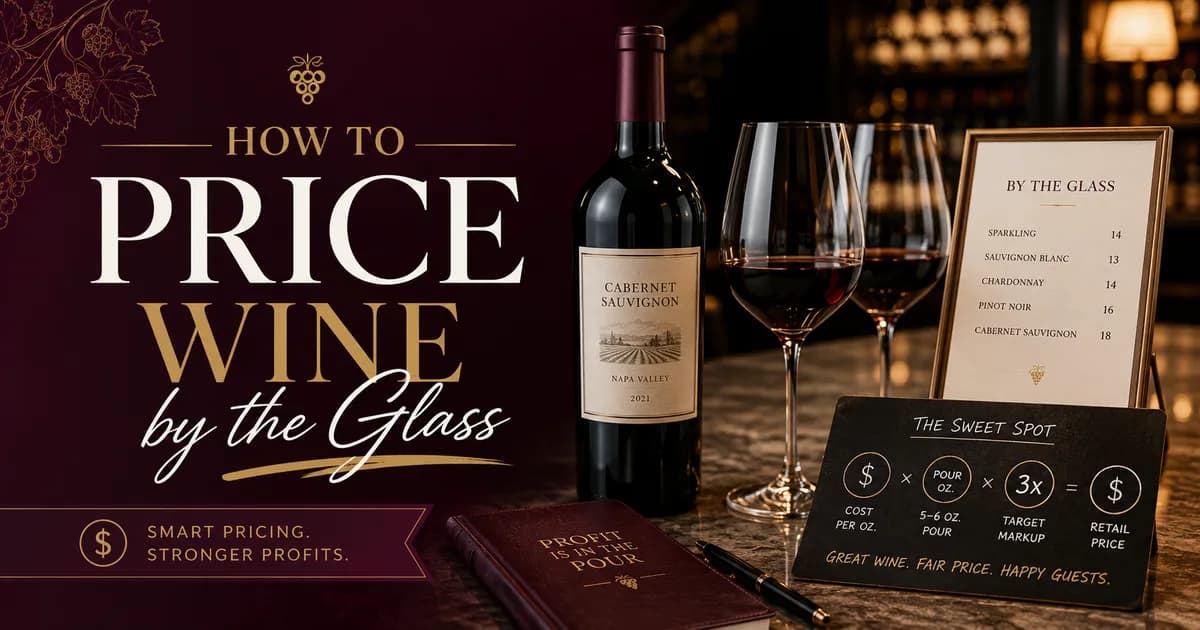
Wine by the glass can be one of the most profitable lines on a bar menu or one of the leakiest, and the difference comes down to two things: how many glasses you actually get from a bottle, and how disciplined the pour is. Price it right and a single bottle can return several times its cost. Pour it loose and the margin disappears one heavy glass at a time. This guide shows how to price wine by the glass so the bottle delivers the profit you expect.
Pricing wine by the glass is part of your overall drink pricing strategy, but it has its own math because the bottle has to cover the glasses you sell before the rest become profit. If you want a calculator-style view of wine cost, pair this with the wine cost calculator guide.
Start With Glasses Per Bottle
A standard wine bottle holds 750ml, which is just over 25 ounces. The number of glasses you get depends on your pour size. A 5 ounce pour gives you about 5 glasses per bottle. A 6 ounce pour gives you about 4 glasses. That single ounce of difference changes your entire margin, because the bottle cost is now spread across fewer sales.
| Pour size | Glasses per 750ml bottle | Effect on margin |
|---|---|---|
| 5 oz | About 5 glasses | More glasses, stronger margin per bottle |
| 6 oz | About 4 glasses | Generous pour, lower glasses per bottle |
| Free pour, no jigger | Unpredictable | Margin you cannot count on |
This is why a measured pour matters so much for wine. With liquor, an over-pour costs you a fraction of a drink. With wine by the glass, an over-pour can cost you a whole glass of sales per bottle, because you run out before reaching the glass count your price assumed.
Calculate Your Cost Per Glass
Once you know glasses per bottle, cost per glass is simple: divide the bottle cost by the number of glasses it yields. A bottle that costs you 20 dollars and pours 5 glasses costs 4 dollars per glass. The same bottle poured at 6 ounces yields about 4 glasses, raising your cost to 5 dollars per glass for the exact same wine. Nothing changed except the pour, and your cost jumped 25 percent.
| Bottle cost | Glasses per bottle | Cost per glass |
|---|---|---|
| $20 | 5 (at 5 oz) | $4.00 |
| $20 | 4 (at 6 oz) | $5.00 |
| $30 | 5 (at 5 oz) | $6.00 |
Apply Your Markup or Target Pour Cost
With cost per glass in hand, price the glass the same way you price any drink: from cost up. Wine by the glass commonly runs a target pour cost in the low to mid twenties, though many bars push glass pricing so the first glass sold nearly covers the bottle. A common rule of thumb is to price the glass at or near what the full bottle cost you, which means the first glass pays for the bottle and the remaining glasses are largely profit.
For a 20 dollar bottle yielding 5 glasses at a 4 dollar cost per glass, a glass price around 9 to 12 dollars puts you in a healthy pour cost range and recovers the bottle cost quickly. Use the markup approach to keep the logic consistent with the rest of your menu, and sanity check against your pour cost targets.
A Simple Wine by the Glass Formula
- 1Set your standard pour size, for example 5 ounces.
- 2Divide bottle volume by pour size to get glasses per bottle, about 5 for a 5 oz pour.
- 3Divide bottle cost by glasses per bottle to get cost per glass.
- 4Divide cost per glass by your target pour cost, for example 0.25, to get the base price.
- 5Adjust toward the market and round to a clean menu number.
- 6Hold the pour with a measured pourer so the glass count actually holds.
Protect the Margin After You Set the Price
Pricing is only half the job. The other half is making sure the bottle actually yields the glasses your price assumed. Three things quietly erode wine by the glass margin: over-pouring, oxidation, and waste. Over-pouring shrinks your glass count. Oxidation ruins open bottles that sell too slowly. Waste from spills and comps comes straight off the top.
Use measured pourers or a marked glass so every pour is consistent. Track which by-the-glass wines actually move so you are not opening bottles that oxidize before they sell. And count wine like any other product so you can see the variance between what you should have poured and what you actually did. Accurate inventory turns wine from a guessing game into a controllable, profitable category. The inventory management guide covers how to track it cleanly.
Frequently Asked Questions
How many glasses of wine are in a bottle?
A standard 750ml bottle holds just over 25 ounces, so a 5 ounce pour yields about 5 glasses and a 6 ounce pour yields about 4. Pour size directly sets your glasses per bottle and therefore your cost per glass.
How do you price wine by the glass?
Calculate cost per glass by dividing bottle cost by glasses per bottle, then apply your target pour cost or markup. Many bars price the glass so the first glass sold nearly covers the entire bottle cost, making the remaining glasses largely profit.
What is a good markup on wine by the glass?
Wine by the glass often runs a target pour cost in the low to mid twenties. A widely used rule of thumb is to price a single glass at or near the bottle cost, so the first glass recovers the bottle and the rest is profit.
Why is my wine by the glass not profitable?
The usual culprits are over-pouring, which cuts your glasses per bottle, and oxidation from bottles that sell too slowly. Measured pours, smart by-the-glass selection, and accurate inventory protect the margin you priced for.
The Bottom Line
Wine by the glass is profitable when you control two numbers: glasses per bottle and cost per glass. Set a standard pour, calculate cost per glass from it, price from cost up, and then hold the pour so the bottle actually delivers the glasses your price assumed. Do that and wine becomes one of the strongest margin lines behind the bar.
Fit this into your wider drink pricing strategy and keep counts accurate so over-pouring and oxidation never quietly erase the profit. Priced and poured with discipline, the bottle pays for itself and then some.
BarGuard Catches What You Can't See
Connect your POS, count your inventory, and let BarGuard show you exactly where the gaps are, automatically, every week.